Short version first: the HTC Vive XR Elite is a genuinely comfortable, convertible headset that does both standalone VR and PC VR, plus color mixed reality. It is also one of the pricier ways into home VR, and after playing location-based VR at more than 50 venues, I have thoughts on whether that premium is worth it for a family. If you want the quick answer, keep reading, because the Vive XR Elite is one of those headsets that is easy to admire and harder to recommend.
I always look at home gear through the lens of the arcade. My family has strapped into haptic vests and walked around real free-roam spaces, so when I test a home headset I am asking one thing: how close does this get you to that feeling, and is it worth the money? Let me break the Vive XR Elite down the way I would for a friend at a barbecue.
HTC Vive XR Elite specs at a glance
Here is the spec sheet before we get into the good and the not-so-good.
| Spec | HTC Vive XR Elite |
|---|---|
| Type | Standalone VR/MR plus PC VR |
| Resolution | 3840 x 1920 combined (1920 x 1920 per eye) |
| Refresh rate | 90Hz |
| Field of view | Up to 110 degrees |
| Processor | Snapdragon XR2 |
| Tracking | 6DoF inside-out (no base stations) |
| Weight | About 625g with battery, drops to roughly 273g in glasses mode |
| Battery | About 2 hours, hot-swappable |
| Mixed reality | Full-color passthrough with depth sensor |
| Lenses | IPD slider plus diopter dials (glasses-free option) |
| Launch price | Around $1,099 base package |
The story those numbers tell is a headset that tries to do everything: standalone, tethered PC VR, and mixed reality, all in a small convertible body. Let me get into how that actually plays out.
What makes the Vive XR Elite special
The comfort and design are the real standout. The XR Elite balances its weight front to back instead of hanging everything on your nose, and reviewers repeatedly called out how much better this feels during a long session than most of the competition. Better yet, it converts. Pop off the rear battery cradle and swap in plastic temple arms, and the headset shrinks down to a much lighter glasses-style form for seated content. Going from around 625 grams to roughly 273 grams is a real change you feel on your face.
I also like the lens setup. It has an IPD slider to match your eye spacing and diopter dials on each lens, which means a lot of glasses wearers can dial in focus and go glasses-free inside the headset. That is a small thing that makes a big difference if you have ever fought to fit your specs under a VR headset.
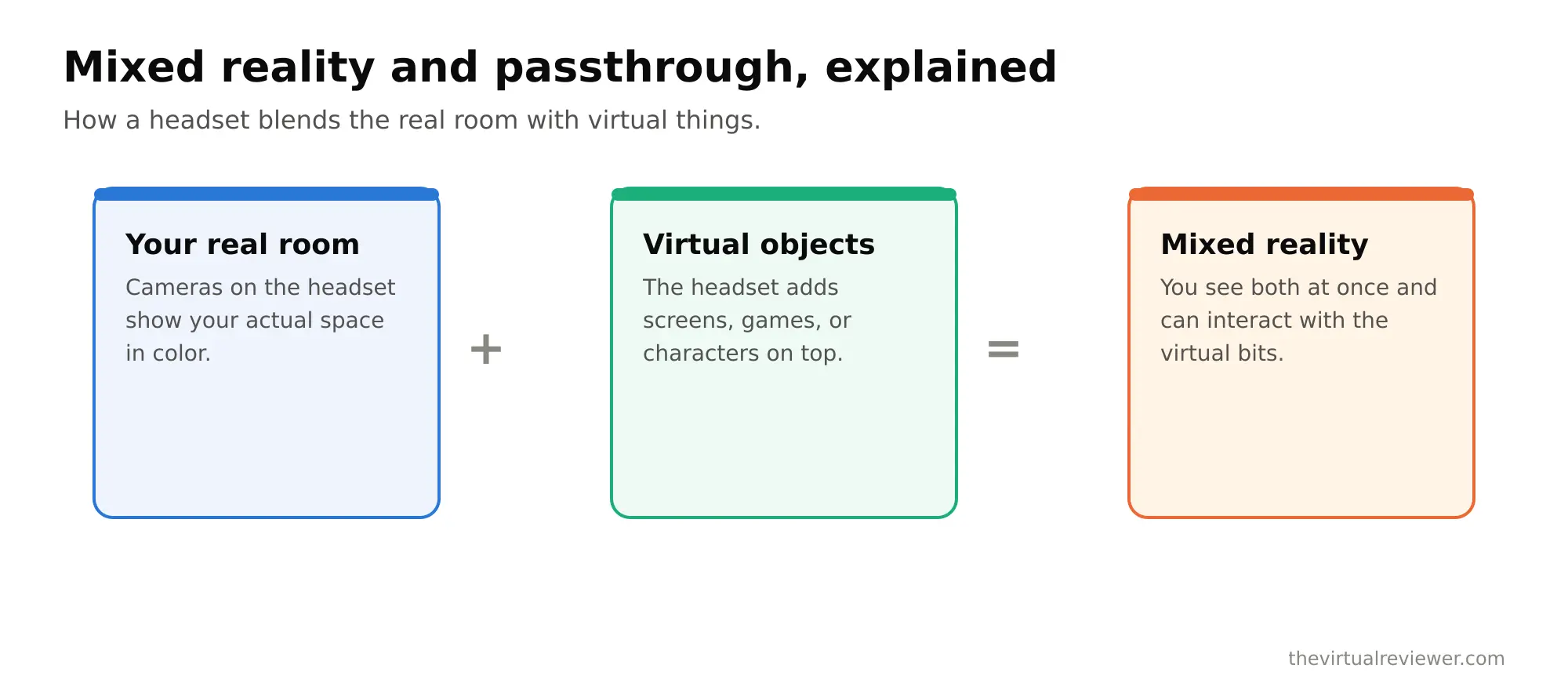
Then there is versatility. The Vive XR Elite is standalone out of the box thanks to its Snapdragon XR2 processor, so you can play with no PC. But when you want the heavier PC VR games, you connect over Wi-Fi or USB-C using Vive Streaming and pull them onto the headset. And it does full-color mixed reality with a passthrough camera and depth sensor, so virtual objects can sit in your real room. On paper, that is a lot of headset.
Where it falls short
Now the honest part. The Vive XR Elite launched at around $1,099 for the base package, which is a steep number in a market where a very capable standalone headset costs a lot less. When reviewers lined it up against cheaper competition, the recurring note was that it costs far more without clearly out-speccing the field. You are paying a premium largely for the design and convertibility, not for a night-and-day jump in image quality.
The mixed reality is another spot where I would temper expectations. It works, and color passthrough is a nice step up from grainy black-and-white, but hands-on coverage described the MR experience as not quite ready for prime time. It is a preview of where things are heading more than a killer daily feature.
Battery life is about two hours, and gaming pulls that down closer to an hour and a half. The hot-swappable design softens that, since you can carry a charged spare, but it is still something to plan around for a long family session.
The venue lens: we loved arcade VR, should we buy this?
Here is the question that actually matters to me. Say your crew had a blast in a free-roam session at Sandbox VR, moving around a real room in haptic vests, or you got pulled into the arena action at Fixation VR in Dallas. Now you want that at home. Does the Vive XR Elite get you there?
It gets you a comfortable, versatile personal headset, and that comfort genuinely matters for the kind of longer sessions a family wants. The convertible design means the kids can do active room-scale games and then flip to something seated and lighter, which is a nice range to have.
What it cannot do, and this is true of every home headset, is give you the warehouse-sized free-roam space or the haptic vest thumping on your chest. At a venue you are physically walking across a big room while operators run a tuned rig. At home you are in a room-scale square with inside-out tracking and controllers in your hands. The Vive XR Elite is a very good version of the home experience, but it is still the home experience, and I would set that expectation with the family before anyone imagines the arcade appearing in the living room.
For the venue-loving family specifically, my worry is value. You can get a lot of the same fun for a lot less money, which brings me to the comparison everyone asks about.
HTC Vive XR Elite vs Meta Quest 3
Most people looking at the Vive XR Elite are also eyeing the Meta Quest 3. Both are standalone, both do color mixed reality, and both play PC VR when you want it. The Vive XR Elite counters with its convertible glasses-style form and its comfort-first design, plus those handy diopter dials.
But the Quest 3 has the deeper game library, strong mixed reality, and a much friendlier price. For most families, that combination is hard to argue with. The Vive XR Elite earns its keep if you specifically value the lightweight convertible design, the glasses-free diopter adjustment, and the Vive ecosystem. If your top priorities are content and value, the Quest 3 is the easier call.
Pros and cons
Pros
– Excellent, well-balanced comfort for longer sessions
– Convertible design drops from around 625g to roughly 273g in glasses mode
– IPD slider and diopter dials let many people go glasses-free
– Standalone, PC VR streaming, and full-color mixed reality in one device
Cons
– High price for what you get versus cheaper standalone rivals
– Mixed reality still feels like an early preview
– Around two hours of battery, less while gaming
– Smaller game and app ecosystem than Meta’s
The verdict
The HTC Vive XR Elite is a well-designed, comfortable, do-it-all headset that I respect more than I would recommend to the average family. If comfort, the convertible form factor, glasses-free diopters, and the Vive ecosystem are what you care about most, it is a solid choice and a pleasure to wear. But for most people coming off a great venue trip and wanting the best mix of fun, content, and value at home, a standalone like the Quest 3 gives you more for less. Admire the XR Elite for its engineering. Just buy it with clear eyes about the price.
FAQ
Is the HTC Vive XR Elite standalone or does it need a PC?
It works standalone thanks to its Snapdragon XR2 processor, so you can play with no PC. You can also stream PC VR games to it over Wi-Fi or USB-C when you want the heavier titles.
How much does the HTC Vive XR Elite cost?
The base package launched around $1,099. Confirm current 2026 pricing before you buy, since retailer prices shift over time.
Does the Vive XR Elite do mixed reality?
Yes. It has a full-color passthrough camera and a depth sensor for mixed reality, though reviewers have described the MR experience as still fairly early.
Can I wear glasses with the Vive XR Elite?
Often you will not need to. It has an IPD slider and diopter dials on each lens, so many glasses wearers can adjust focus and use it glasses-free.
Vive XR Elite or Meta Quest 3?
For most families, the Quest 3, thanks to its bigger game library, strong mixed reality, and lower price. Choose the Vive XR Elite if you specifically want the lighter convertible design and glasses-free diopters.